
Self-Guided
-
![]()
Historic Properties Map
-
![]()
Provincial Exile: Roelof J. Eltinge and Solomon Eltinge's Banishment from the Paltz
-
![]()
John Hasbrouck "A Most Estimable Citizen" Exhibit
-
![History of 16 S. Chestnut Street, New Paltz, New York]()
History of 16 S. Chestnut Street, MLWS 6th grade class
-
![]()
Seed Library
-
![]()
Civil War, Poverty and Tales of a Congregation
-
![]()
Witness Stones of Anthony, Susanna, Jack and Betty
-
![]()
Historic Huguenot Street and “Jacob Wynkoop: Building a Free Black Neighborhood”
-
![]()
New Paltz Historical Documents
-
![]()
Flavors of Change: Food Stories from the Mid-Hudson Valley, 1680-1800
SELF-GUIDED: New Paltz Historical Documents
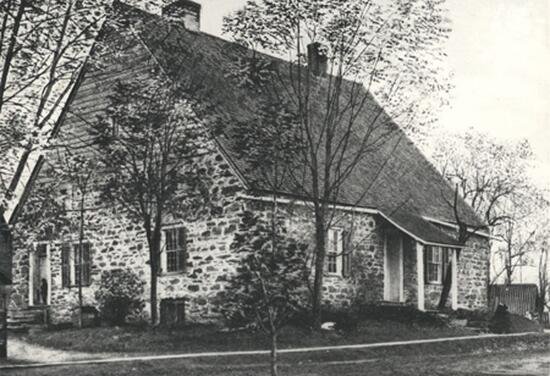
The Town of New Paltz was established in 1677, when twelve men and their families, in search of religious freedom and economic opportunity, signed an agreement with sachems of the Esopus-Munsee tribe to reside on nearly 40,000 acres of their land. A patent was then granted by the first proprietary governor of New York, Sir Edmund Andros. The original boundaries of the patent contained a large part of present-day southeastern Ulster County stretching from the Shawangunk Mountains to the Hudson River, including portions of, what are today, neighboring towns.
SELF-GUIDED: History of 16 S. Chestnut Street, 6th grade
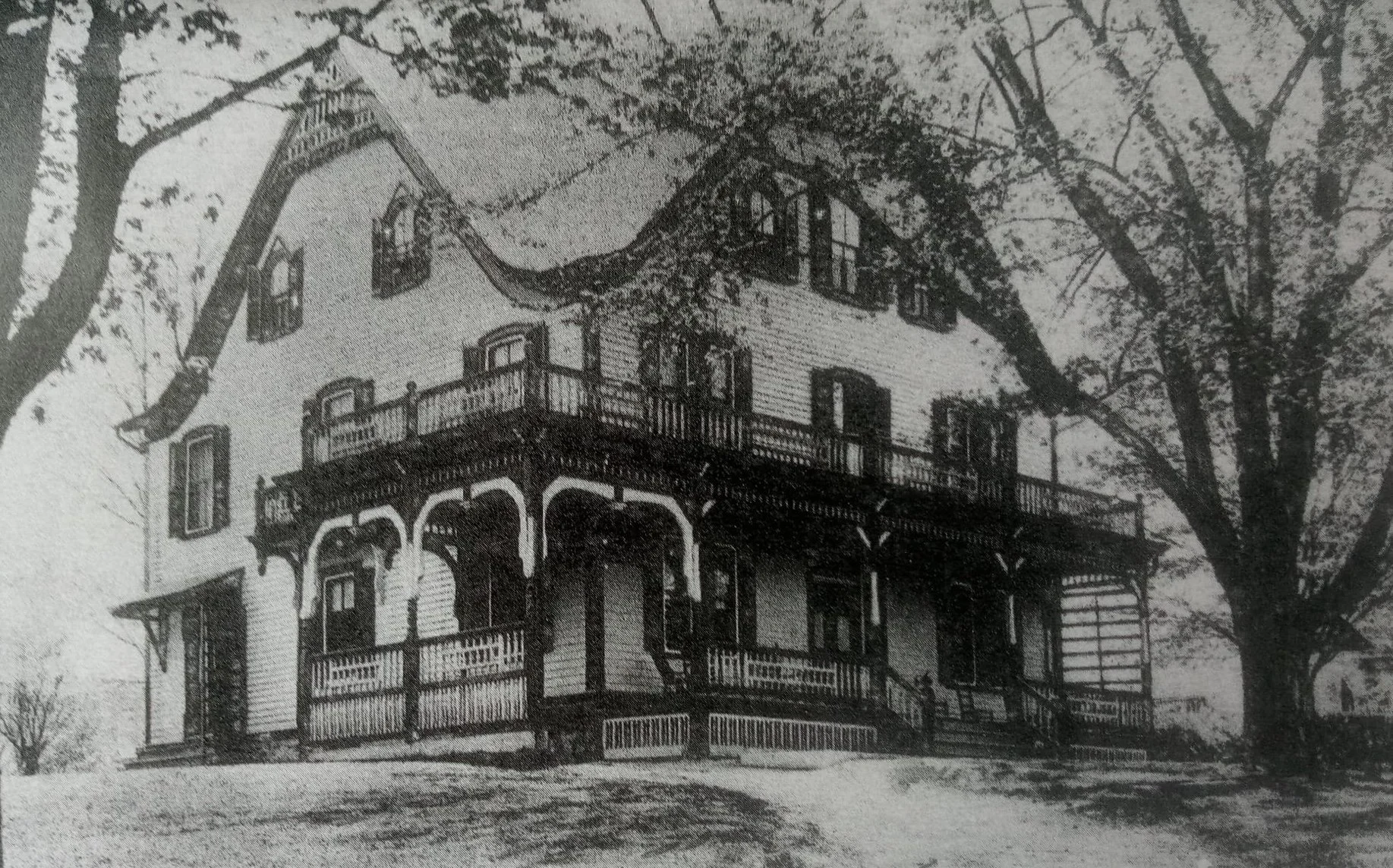
As part of the REV 250 initiative, Ms. Tomoko’s 6th grade class will participate in a student-centered historical writing and publishing project. Students will research local history and historic buildings, including the history of their own school building at 16 S. Chestnut Street. They will also explore historical character fiction writing, imagining the lives and voices of people connected to these places in the past.
Students will compile their research and creative writing into a small published book that will serve as both a community resource and an educational tool for future classes.
This project engages students directly in local historical preservation and storytelling while creating an intergenerational learning resource for younger students, including 4th graders studying local geography and history. It also contributes a youth voice to the REV 250 celebration and strengthens students’ sense of place, identity, and civic connection.
Ms. Tomoko’s 6th grade students are working with writer Christine Kerr Horgan, an author and infectious disease physician whose work explores themes of medicine, motherhood, and modern life.
To learn more about the publication and future presentations and readings of this project email hello@revolutionarynewpaltz.com.

Website: https://mountainlaurel.org
Instagram: @mountainlaurelschool
Facebook: @mountainlaurelwaldorfschool
Mountain Laurel Waldorf School is a private day school in the Hudson Valley serving children from parent/child playgroups through eighth grade. Rooted in Waldorf education, we are dedicated to nurturing the intellect, emotions, and will of each child, and to cultivating thoughtful, creative, and engaged young citizens. Our educational philosophy emphasizes developmentally appropriate learning, creativity, and deep connection to place and community.
SELF-GUIDED: Walking Tour, Historic Huguenot Street and “Jacob Wynkoop: Building a Free Black Neighborhood”
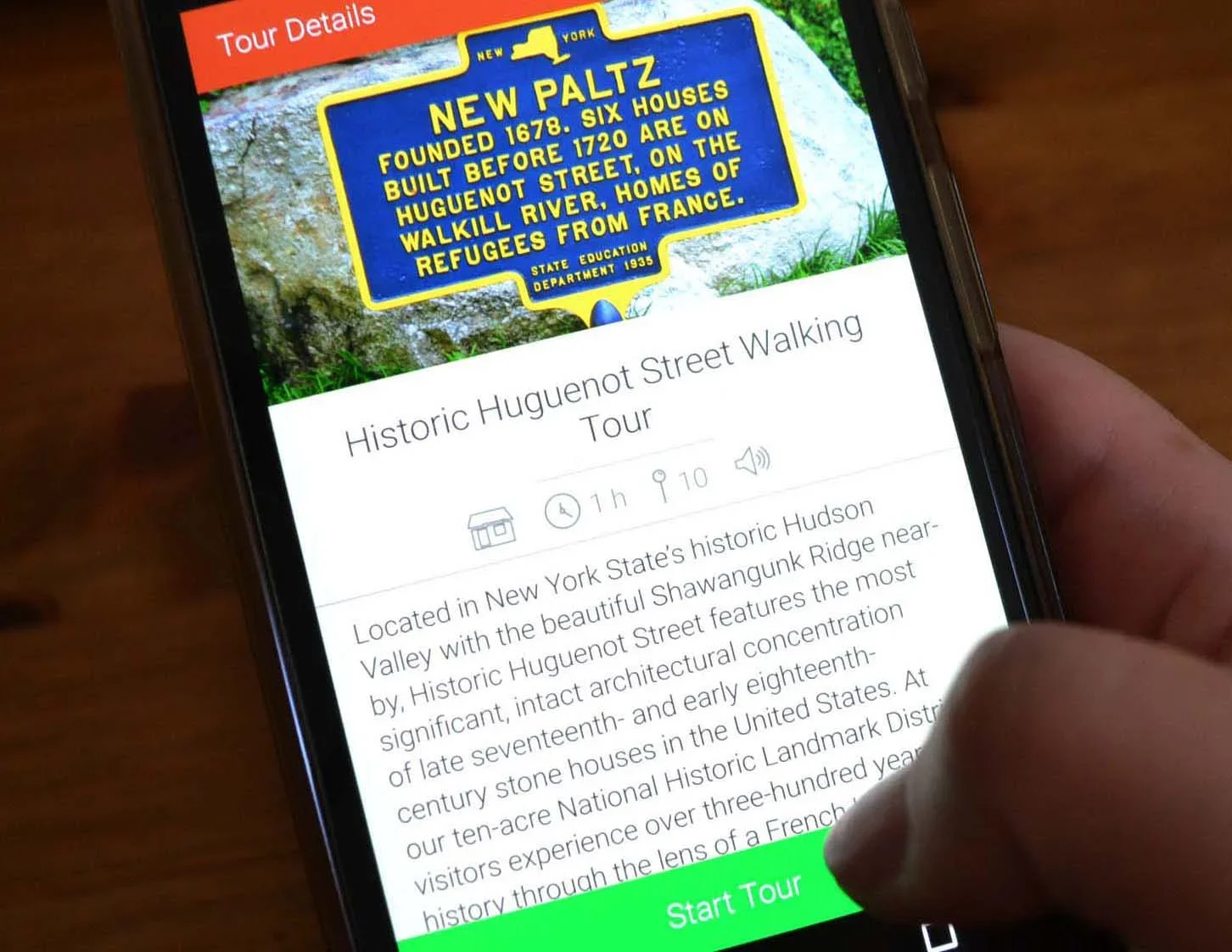
The Historic Huguenot Street Walking Tour app provides succinct narratives for each of the historic buildings on the street with information about the architecture, past residents, and multicultural history of New Paltz. While using the app, you can view archival photos, images of the buildings’ interiors, and the collections pieces within. The tour features the Crispell Memorial French Church, the replica Esopus Munsee wigwam, and all seven historic house museums.
Development of the app was made possible in part through support from the County of Ulster’s Ulster County Cultural Services & Promotion Fund administrated by Arts Mid-Hudson. Narration by Grace Angela Henry.
Huguenot Street is proud to offer a new walking tour app titled “Jacob Wynkoop: Building a Free Black Neighborhood,” narrated by Chaundre Hall-Broomfield, a Newburgh native and performer known for his dual roles as Hercules Mulligan and James Madison in the national tour of “Hamilton” with the Angelica company. This new addition to the app (available now at the App Store and Google Play) takes visitors on a guided tour of the Broadhead-Church-Mulberry neighborhood of New Paltz, highlighting the houses built by 19th-century Black carpenter and Civil War veteran Jacob Wynkoop.
SELF-GUIDED: Historic Properties Map
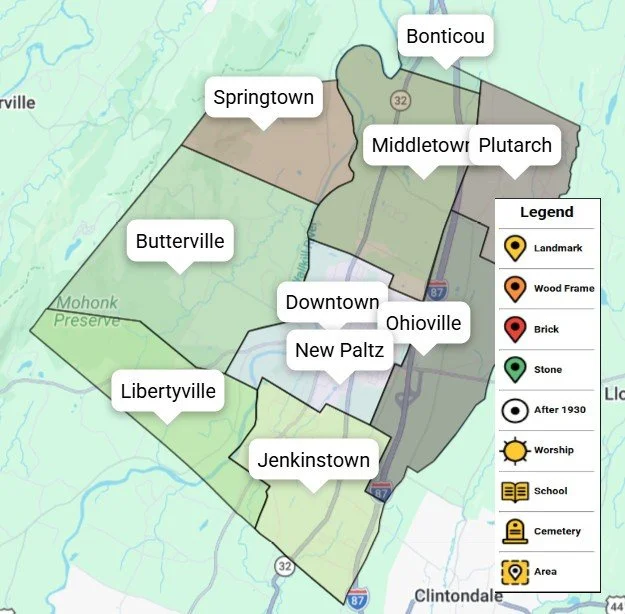
The Historic Properties Map is an interactive resource through which you can research individual properties plus historic hamlets and areas in the Town of New Paltz for detailed information about each. The Town of New Paltz Historic Preservation Commission (HPC) has produced and made the map and database available to the public. Its contents reflect a town with a deep, valuable, and varied history.

SELF-GUIDED: Exhibits, Civil War, Poverty and Tales of a Congregation
New Paltz in the Civil War
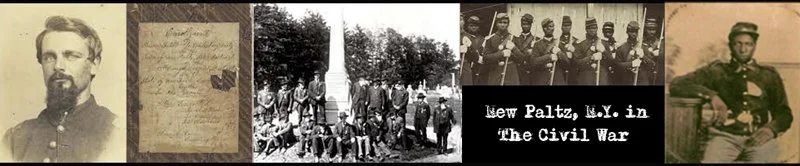
This exhibit includes the entire 1863 New Paltz Enrollment Book and its transcription, a consideration of conscription laws, an examination of particular New Paltz regiments, a partial list of Civil War veterans buried at the New Paltz Rural Cemetery, and a look through the eyes of individuals who experienced the war.
Poverty in Early New Paltz
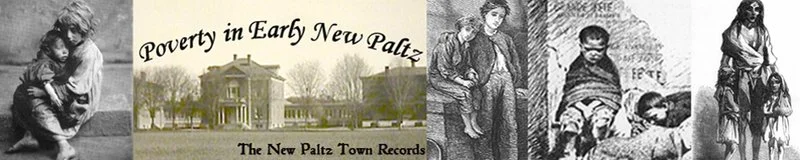
This exhibit is a study of the history of poverty and social welfare in the town of New Paltz, New York. The 1805 Overseer of the Poor Ledger is included with additional documents dating from 1767-1827.
Tales of a Congregation
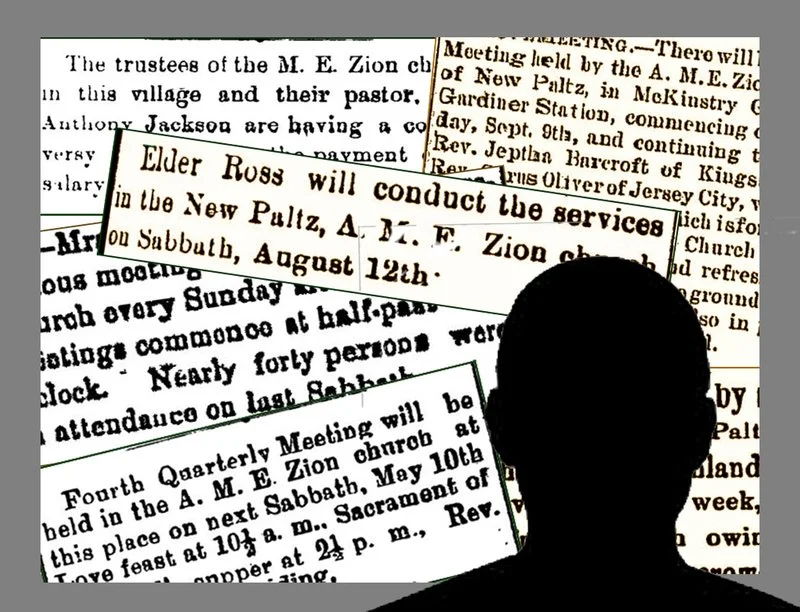
frican American History through the lens of the AME Zion Church of New Paltz, NY: This exhibit chronicles the birth of the New Paltz AME Zion Church from 1871 to its slow decline circa 1915. Using various primary sources, the exhibit highlights the many obstacles the African American Community would face in the church's 45 years of existence.
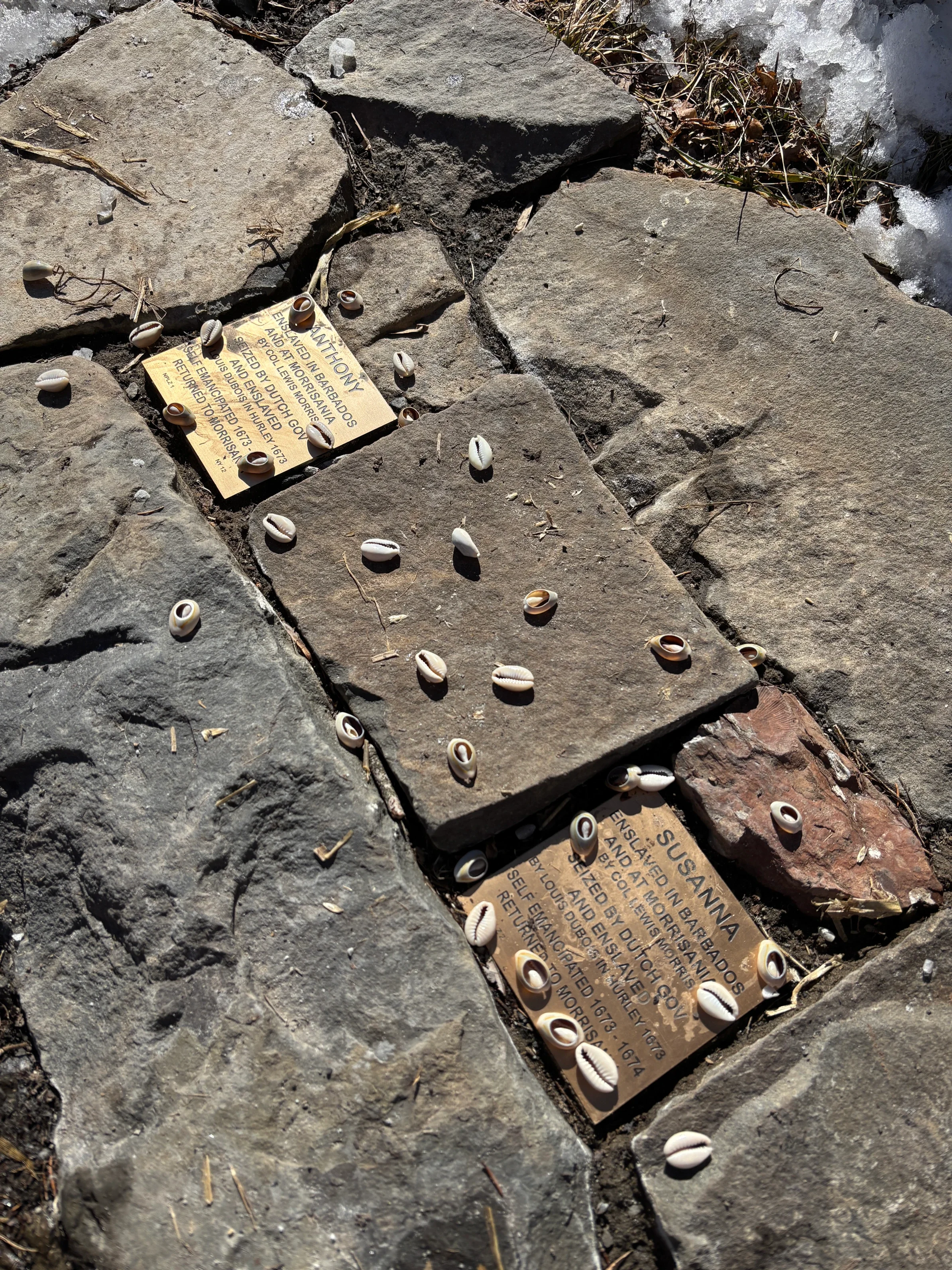
SELF-GUIDED: Witness Stones of Anthony, Susanna, Jack and Betty
SELF-GUIDED: Witness Stones of Anthony, Susanna, Jack and Betty
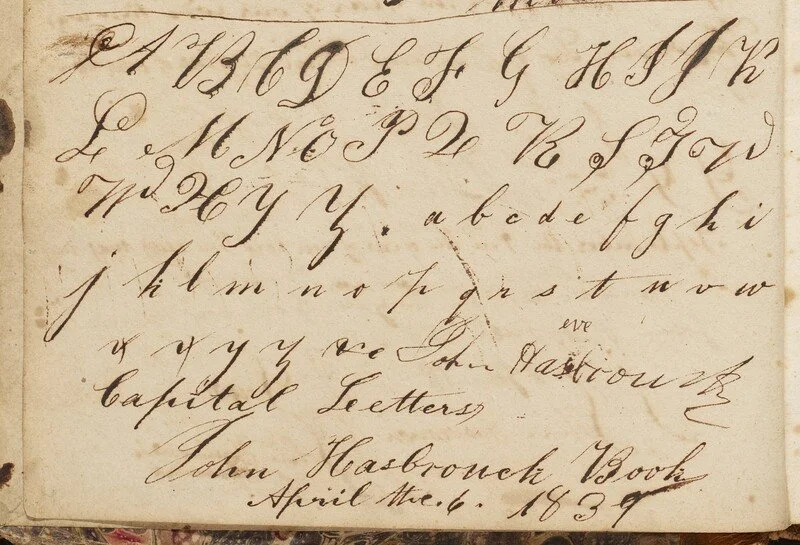
SELF-GUIDED: John Hasbrouck “A Most Estimable Citizen” Exhibit
There are no known photographs of John Hasbrouck, born to enslaved parents Peg and Philip. We know John through 19th-century documents such as government records, account books (including two extraordinary books he kept himself), newspaper clippings, and a few personal notes, letters, and receipts. From these fragments, we can form an impression of an intelligent, industrious, and imaginative man, who overcame the challenges of growing up under gradual abolition to marry and raise a family, purchase land, and become one of the first African Americans eligible to vote in New Paltz, New York.
This online exhibit reflects new discoveries about John’s family connections and his early adult years as a free man, as well as previously unexplored connections to both the Black and White communities of New Paltz. It updates and greatly expands the exhibit text for John Hasbrouck, “A Most Estimable Citizen,” installed at the DuBois Fort Visitor Center, Historic Huguenot Street, in 2017 and 2018.

SELF-GUIDED: Seed Library
Inch by inch
row by row
let us help your garden grow!
In partnership with the Library of Local we are offering the resources you need to get your garden into shape from seeds to seed starters to books on gardening.
We carry seeds such as:
Arugula
Basil
Tomato
Butternut Squash
Cilantro
Daisies
Nasturtium
Lettuce
Snap Peas
and many, many more! Including SPICES and HERBS, we carry: Bay Leaves, Coriander, Cumin, Fennel Seeds, Chili Powder, and more!
Both the Spice and Seed Library are not part of the online catalog. Please visit the library to make use of these resources.
If you need a place to plant those seeds check out New Paltz Gardens for Nutrition for possible garden plots!
Website: https://www.eltinglibrary.org/
Website: https://libraryoflocal.org/
Instagram: @eltinglibrary
Facebook: @EltingMemorialLibrary
SELF-GUIDED: Provincial Exile: Roelof J. Eltinge and Solomon Eltinge's Banishment from the Paltz
While no Revolutionary War battles took place in New Paltz, New York, the conflict drastically impacted the lives of two men, brothers Roelof Josiah Eltinge and Solomon Eltinge, as well as their family. Roelof Josiah and Solomon were accused of being Loyalists to the British side after refusing to accept paper currency produced by the Continental Congress in their family store. As a result, both brothers were imprisoned and eventually exiled to live behind enemy lines in British-controlled New York for the duration of the war, leaving behind their elderly parents, siblings, and Roelof Josiah’s wife Maria and their eleven children.
Drawn primarily from original eighteenth-century documents in the Historic Huguenot Street (HHS) Archives and the Haviland-Heidgerd Historical Collection, Elting Memorial Library, this exhibit updates and expands upon text written for an earlier HHS exhibit. It adds to the story of Solomon Eltinge and highlights the experiences of Roelof Josiah’s wife Maria Louw and their family.
To explore additional online exhibits created by Historic Huguenot Street, go to https://www.huguenotstreet.org/exhibits.